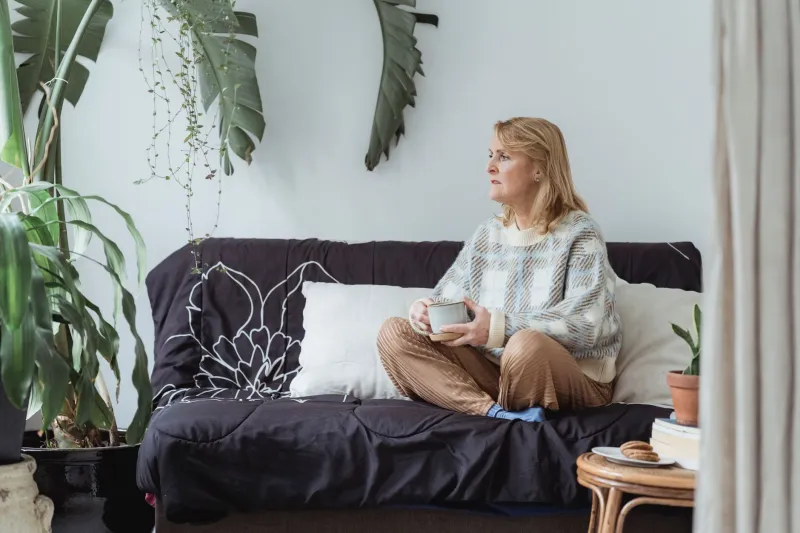
You Deserve to Rest: Unpacking the Guilt That Keeps You From Your Own Comfort

Somewhere between buying that soft throw blanket and actually sitting down to enjoy it, a voice creeps in. Shouldn't you be doing something? Maybe you had a whole Sunday afternoon cleared out — no obligations, no plans — and instead of sinking into your couch, you found yourself reorganizing a drawer you didn't need to reorganize. Just to feel productive. Just to feel worthy of the downtime you hadn't technically earned yet.
If that sounds familiar, welcome to the club. It's a big one.
There's a very real psychological phenomenon happening when we feel guilty about prioritizing comfort, rest, or anything that looks — even vaguely — like indulgence. And for a lot of people in the US, that guilt isn't accidental. It was practically built into us.
Hustle Culture Didn't Just Change How We Work — It Changed How We Rest
For the past two decades, American culture has been quietly (and sometimes loudly) rebranding busyness as a virtue. Being slammed at work became a flex. Sleeping less was reframed as discipline. Phrases like rise and grind and no days off moved from gym-bro motivation posters into the broader cultural bloodstream, showing up in everything from LinkedIn posts to parenting advice.
The result? A lot of us internalized the idea that our value is tied directly to our output. And when your worth feels conditional on what you produce, anything that isn't production starts to feel like theft — like you're stealing time from some imaginary productivity quota you haven't yet met.
Resting at home, making your space feel beautiful and soft and warm — none of that generates a deliverable. So it gets filed, consciously or not, under guilty pleasure rather than necessary human need.
The Protestant Work Ethic Is Still Running in the Background
This isn't just a social media problem. The discomfort around rest and comfort has much older roots. Historians and sociologists have long pointed to the Protestant work ethic — the deeply embedded cultural belief that hard work is morally righteous and idleness is sinful — as a foundational influence on American attitudes toward labor and leisure.
You don't have to be religious, or even aware of this history, to have absorbed its effects. It lives in the cultural water. It's why we feel compelled to justify a vacation by talking about how burned out we were. It's why we describe sleeping in as being lazy rather than getting what our body needed. It's why making your home feel cozy can somehow feel self-indulgent rather than self-sustaining.
When you understand that the guilt has a lineage — that it was handed down through generations of cultural messaging, not generated by your own moral failure — it starts to lose a little of its grip.
Comfort Has Been Gendered, Too
It's worth naming something that doesn't get said enough: the guilt around comfort isn't distributed equally. Women, in particular, have historically been conditioned to put their own needs last. Creating a cozy home was acceptable when it was framed as caregiving — making a sanctuary for the family, not for yourself. The moment it becomes about your own pleasure or peace, it starts to feel selfish.
That's a setup, not a truth. Your comfort is not a lesser priority than everyone else's. Your need for warmth, softness, and rest is not a frivolity to be scheduled in only after everything and everyone else has been taken care of.
This matters not just personally, but practically. You cannot pour from an empty mug, as the saying goes — and yet we keep trying, then feeling guilty when we finally stop to refill.
What the Research Actually Says About Rest
Here's the part where the science comes in, because sometimes we need permission in the form of data. Rest is not a reward for productivity. It's a prerequisite for it.
Studies on cognitive function consistently show that the brain doesn't just tolerate downtime — it requires it. During rest, the brain's default mode network activates, which is linked to creativity, emotional processing, and memory consolidation. In other words, doing nothing is actually doing something. It's just doing something your conscious mind can't take credit for, which is maybe why it feels so uncomfortable.
Beyond cognition, chronic stress — the kind that comes from never truly switching off — has been linked to elevated cortisol levels, disrupted sleep, weakened immune response, and a host of other physical consequences. Creating a home environment that genuinely helps you decompress isn't a luxury. It's a health strategy.
The Trap of Performative Productivity
One of the sneakier ways comfort guilt shows up is in what you might call performative productivity — doing things that look like work or usefulness, even when they're not particularly necessary, just to avoid the discomfort of being seen (or seeing yourself) as idle.
Cleaning the kitchen for the third time. Answering emails on a Saturday morning when they could absolutely wait until Monday. Scrolling through work Slack on vacation. These behaviors aren't really about getting things done. They're about managing the anxiety that comes from not doing things.
Recognizing this pattern is genuinely useful, because it reveals something important: the discomfort isn't coming from your couch or your candle or your slow Sunday morning. It's coming from an internalized script about what you're allowed to enjoy.
And scripts can be rewritten.
Reclaiming Your Sanctuary Without Justification
So what does it actually look like to let yourself off the hook?
It starts small, and it starts with noticing. The next time you feel that twinge of guilt for taking a bath in the middle of the afternoon, or for spending an hour arranging your bookshelf in a way that makes you happy, just notice it. Name it. There's that guilt again. You don't have to argue with it or banish it immediately — just observe it without immediately obeying it.
From there, try reframing the story you're telling yourself. Instead of I'm being lazy, try I'm recovering. Instead of I should be doing something, try this is something. Rest is something. Beauty is something. Warmth and softness and a home that feels like yours — those are something.
You don't need to earn the right to feel comfortable in your own home. You don't need to hit a productivity threshold before you're allowed to light the good candle. You don't need to justify a slow morning to anyone, including yourself.
Your comfort isn't the enemy of your ambition. More often than not, it's the thing that makes everything else sustainable.
The View From Here
At The Cozy View, we think a lot about what it means to actually inhabit your home — not just sleep there between obligations, but genuinely live in it. That requires giving yourself permission that no one else is going to hand you.
The culture around us is loud and relentless and deeply suspicious of stillness. But your home can be the one place where you get to set different terms. Where comfort isn't a consolation prize for a hard week — it's just part of how you live.
You're allowed to want that. You're allowed to build that. And you're definitely allowed to enjoy it without a single apology.