Stop Trying to Make Cozy Happen: How the Hygge Obsession Backfired on All of Us
Let's be honest for a second. At some point in the last decade, "cozy" stopped being a feeling and started being a product category.
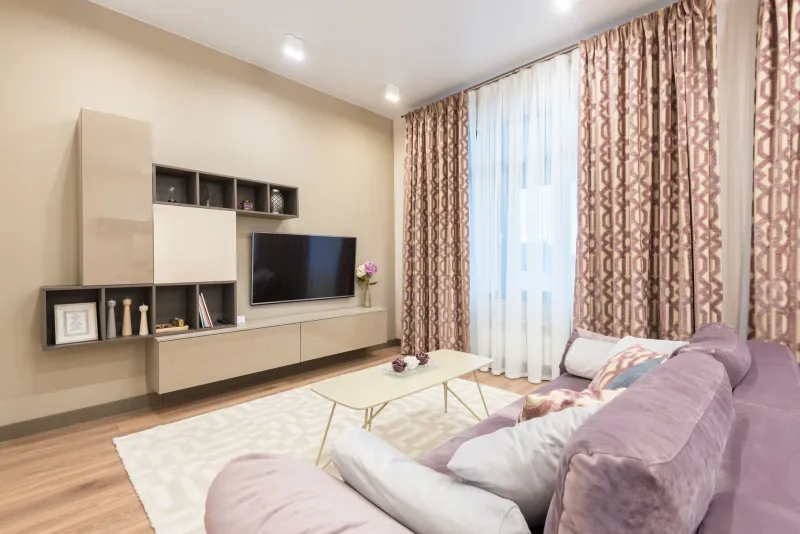
It probably crept up on you gradually. A Pinterest board here, a Magnolia-adjacent home haul there. Suddenly you were deep in a rabbit hole of linen throw pillows, artisan hot cocoa mixes, and $60 beeswax taper candles — all in the name of comfort. And yet, somehow, your home still doesn't feel quite right. You rearrange the blanket basket for the fourth time and wonder why the whole thing feels more like staging an Airbnb than actually unwinding.
You're not imagining it. The cozy aesthetic industrial complex has a lot to answer for.
When a Feeling Becomes a Formula
Hygge — the Danish concept of coziness, togetherness, and psychological warmth — entered the American cultural conversation around 2016 and promptly got commodified at warp speed. Books, product lines, entire retail sections dedicated to the concept mushroomed overnight. And while there's nothing wrong with drawing inspiration from a genuinely lovely cultural philosophy, something got lost in translation.
The original idea was never about stuff. It was about atmosphere, presence, and the quiet pleasure of being comfortable in your own skin and your own space. But American consumer culture does what it does best: it took an intangible feeling and sold it back to us in a box.
The result? A generation of people who feel vaguely guilty that their living room doesn't look like a Scandinavian cabin in the woods — even if they live in a studio apartment in Phoenix.
The Perfectionism Problem
Here's where things get genuinely counterproductive. Comfort, by its very nature, is supposed to be low-stakes. It's supposed to be the absence of effort and pressure. But when you're scrolling through feeds full of impossibly soft lighting, color-coordinated bookshelves, and steam rising photogenically from a mug, you're absorbing a subtle but persistent message: your cozy isn't good enough yet.
That message is toxic to actual relaxation.
Psychologists who study well-being have long noted that the gap between where we are and where we think we should be is one of the primary drivers of low-grade anxiety. Apply that to your living room and you've got a recipe for a space that feels more like a project than a refuge. You can't truly decompress somewhere you're constantly evaluating.
And social media, bless its heart, has made this infinitely worse. The cozy content genre is enormous — #hygge alone has hundreds of millions of posts on Instagram. Each one is a curated moment, photographed with intention, filtered and cropped for maximum warmth. None of them are real life. But our brains don't always remember that when we're comparing our Tuesday evening to someone else's highlight reel.
Comfort Is Deeply Personal (and Weirdly Specific)
Here's the thing nobody in the cozy content space really wants to say out loud: what makes you feel genuinely at ease is probably pretty weird and specific to you.
For some people, it's a particular worn-out hoodie that's been washed so many times it's almost translucent. For others, it's the background hum of a baseball game on TV even if they're not really watching. Maybe it's the smell of whatever your grandmother used to cook, or the particular angle of afternoon light through a window that hits just right. Maybe it's organized chaos — a desk covered in papers and coffee rings that signals, this is where I do my thinking.
None of that photographs particularly well. None of it would sell you a product. But all of it is real, legitimate comfort.
The framework for finding your authentic version of coziness isn't complicated, but it does require a little honest self-reflection:
Ask yourself what you're actually drawn to when no one's watching. Not what you pin, not what you'd want a guest to see — what do you actually gravitate toward when you're winding down? That's your data.
Notice what makes your shoulders drop. Comfort has a physical signature. Pay attention to the moments in your home when your body genuinely relaxes. Those are clues.
Stop optimizing for the photo. If you're making a decision about your space based on how it would look rather than how it would feel, pause. Those two things are often in direct conflict.
Give yourself permission to be a little chaotic. Coziness and tidiness are not the same thing. Some of the most genuinely comfortable homes are a little lived-in, a little eclectic, a little imperfect.
The Cozy You Already Have
One of the more quietly radical ideas in all of this is that you might not need to acquire anything. Not one more candle, not a new throw, not a diffuser or a chunky knit pouf. The comfort you're looking for might already exist in your home — buried under the noise of what you think it's supposed to look like.
There's a reason that when people describe the coziest places they've ever been, they rarely lead with the décor. They talk about the people who were there. The meal that was shared. The conversation that stretched past midnight. The sense that time slowed down and nothing was required of them.
That's not something you can buy at Target's fall section, no matter how good the merchandising is.
A Different Kind of Cozy Practice
If you're genuinely committed to building a more comfortable life — not just a more comfortable-looking one — the work is less about acquisition and more about subtraction. What obligations, aesthetics, or expectations can you let go of? What would your home feel like if you stopped performing comfort and just... practiced it?
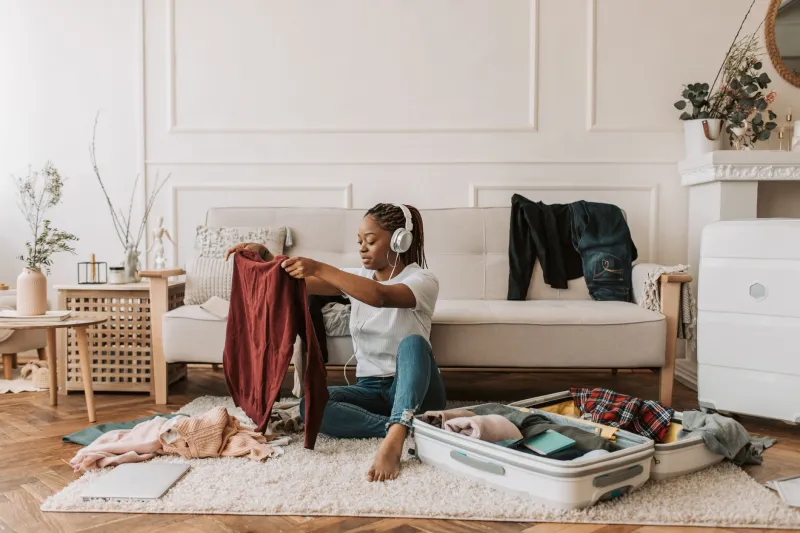
That might mean letting the blanket stay in the messy pile instead of refolding it for the hundredth time. It might mean lighting a cheap grocery store candle instead of the expensive one you're saving for a special occasion. It might mean turning off the content that makes you feel like your life needs an upgrade and sitting with what you actually have.
The cozy view — the one worth having — is the one from inside your own experience, not the one framed for someone else's consumption.
And that version? It was always free.