When Staying In Becomes Hiding Out: The Fine Line Between Rest and Running Away
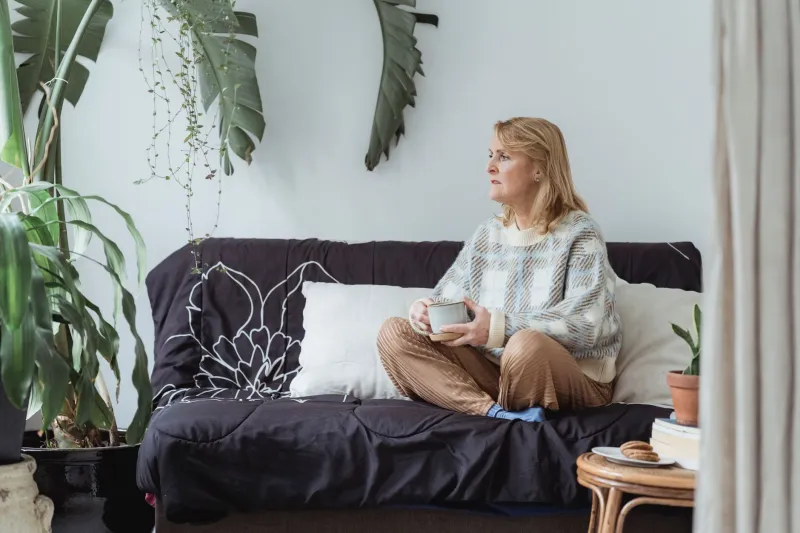
There's a particular kind of Sunday that a lot of us know well. The candles are lit, the blanket is perfect, the playlist is doing exactly what you need it to do. The world outside feels loud and complicated, and in here, everything is soft and manageable. It feels like self-care. It feels like exactly what you deserve.
And sometimes, it genuinely is.
But sometimes — and this is the part nobody really wants to talk about — it's something else. Sometimes the cozy room isn't a place you're resting in. It's a place you're hiding in. And the difference between those two things matters more than most comfort-forward content will ever admit.
The Psychology of the Soft Retreat
Psychologists have long recognized that humans need what's called a "safe base" — a physical or emotional anchor point that makes it possible to go out into the world and take risks. Think of it like a charging station. You plug in, you restore, and then you go back out. The base exists to support your movement outward, not to replace it.
Restorative comfort works exactly like that. You come home exhausted after a hard week, you let your nervous system settle, you sleep well, you eat something warm, and by Monday you feel capable again. The cozy environment did its job. It served your life.
Escapist comfort operates on a different logic. Instead of preparing you to re-engage, it becomes the reason not to. The to-do list stays untouched because the couch is too good. The difficult conversation gets postponed because tonight isn't the right night. The creative project, the gym membership, the friend you've been meaning to call — all of it waits while you optimize your throw pillow situation.
Neither version looks obviously wrong from the outside. That's what makes this particular trap so easy to fall into.
Comfort Culture and the Glorification of Stillness
We live in a moment that has genuinely overcorrected on hustle culture, and honestly? Good. The grind-at-all-costs mentality was always unsustainable and frequently harmful. But the pendulum has swung hard in the other direction, and somewhere along the way, stillness got rebranded as wisdom regardless of context.
Content about cozy living — and yes, we're aware of the irony here at The Cozy View — can sometimes feed a narrative where retreating inward is always the brave, self-aware choice. Rest is resistance. Saying no is strength. Staying home is radical.
Except sometimes rest is avoidance. Sometimes saying no is fear wearing a boundary costume. Sometimes staying home is just... staying home, because the alternative feels too hard.
The aesthetics of comfort are genuinely beautiful and worth celebrating. But aesthetics don't tell you why you're sitting still.
How to Tell the Difference
Here's a framework that's less about judging your habits and more about getting honest with yourself.
Ask what you're coming from. Restorative comfort usually follows something — exertion, stress, social effort, hard work. You earned the stillness in a literal, metabolic sense. Your body and mind spent something, and now they need to recover. Escapist comfort often precedes something. It shows up right before the thing you're avoiding would have to happen.
Notice how you feel afterward. Genuine rest leaves you feeling more like yourself. There's a quality of readiness to it, even if it's quiet. Comfort-as-avoidance tends to leave a faint residue of unease — a vague guilt, a low-level anxiety that the blanket couldn't quite smother. You might feel physically relaxed but emotionally no better than when you started.
Check in on your relationship with discomfort. This is the big one. If the idea of leaving your comfort zone — literally or figuratively — has started to feel not just unappealing but genuinely threatening, that's worth paying attention to. A healthy relationship with your cozy space means you can leave it without a crisis. You want to come back, but you're not afraid to go.
Look at your timeline. One slow Sunday is recovery. Three months of slow Sundays where nothing in your life changes or grows is a pattern.
Making Your Space Work For You, Not Instead of You
None of this means your home should be spartan or uncomfortable. That's not the point, and it's not a solution. The goal isn't to make your space less cozy — it's to make sure your cozy space is actually serving the life you want to be living.
A few small shifts can help recalibrate the relationship.
Designate your comfort intentionally. When you decide to spend an evening in, make it a choice rather than a default. Light the candle because you want to, not because you forgot to think about alternatives. Intentional rest hits differently than accidental stagnation.
Bring your ambitions into the space. Your cozy environment doesn't have to be in opposition to your goals. A reading nook that's stocked with books you actually want to read, a warm corner set up for journaling, a kitchen that makes cooking feel inviting rather than like a chore — these are ways your home can support growth rather than pause it.
Let discomfort visit sometimes. Not everything that happens in your home needs to be comfortable. Hard conversations, creative frustration, the awkward early stages of a new habit — these can happen at home too, and they probably should. A space that can only hold your ease is a space that's limiting your range.
The Cozy Life Worth Having
The version of cozy living worth building isn't the one where everything is always soft and nothing is ever hard. It's the one where your home is genuinely on your side — where the warmth you've cultivated actually fuels something, gives you somewhere to return to after you've been out in the world doing the things that matter to you.
That's the real promise of a comfort-centered home. Not escape. Restoration.
The difference is everything.