Is Your Cozy Routine Actually a Coping Mechanism in Disguise?

Photo: Unknown authorUnknown author, Public domain, via Wikimedia Commons
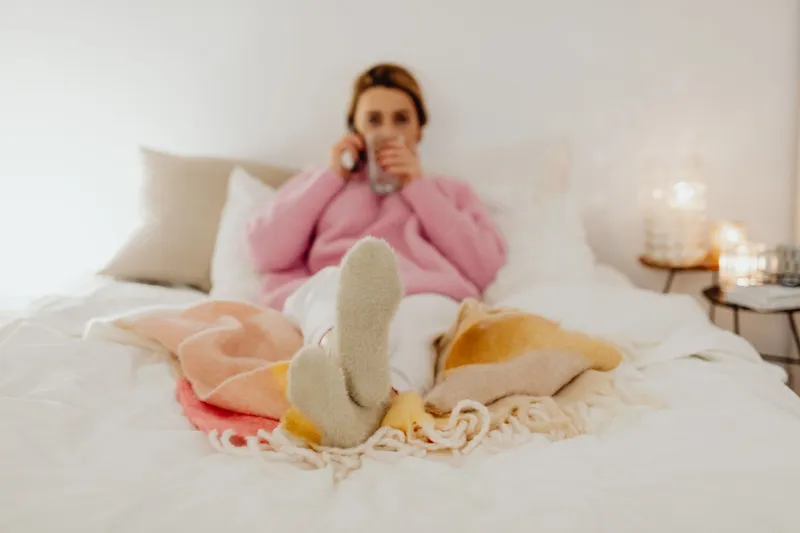
Let's be honest: there are few things more appealing than a rainy Sunday with nowhere to be, a weighted blanket pulled up to your chin, and a show you've already seen three times playing in the background. That kind of comfort is real, it's valid, and honestly? Sometimes it's exactly what your nervous system needs.
But here's the question nobody really wants to sit with: what if the blanket isn't just cozy — what if it's a barrier?
Comfort, by its very nature, feels good. That's the point. But psychologists have long recognized that the things that feel best in the short term can sometimes work against us in the long run. And the tricky part about comfort-as-avoidance is that it doesn't look like a problem. It looks like self-care.
When Rest Stops Being Restful
Healthy rest has a kind of restorative quality to it — you emerge from it feeling more equipped to face the world, not less. Avoidance, on the other hand, tends to leave you in roughly the same emotional place you started, or sometimes worse. The couch didn't fix anything. You just didn't have to think about it for a while.
Therapists often describe avoidance as any behavior that functions to reduce short-term discomfort while simultaneously preventing a person from engaging with something that actually needs addressing. In clinical settings, avoidance is a core feature of anxiety disorders, depression, and burnout — and it doesn't always look like canceling plans or refusing to leave the house. Sometimes it looks like meticulously reorganizing your bookshelf instead of making a difficult phone call. Sometimes it looks like spending three hours researching throw pillow combinations instead of opening your email.
The comfort becomes the distraction.
The Psychology Behind the Pull
According to the Diagnostic and Statistical Manual of Mental Disorders (DSM-5), avoidance behaviors are characterized by a pattern of steering clear of situations, thoughts, or feelings that trigger distress — even when that avoidance interferes with daily functioning or personal goals. The key word there is interferes. Not every cozy evening is avoidance. But when your cozy evenings start consistently replacing things that matter to you — relationships, work, growth, connection — that's when it's worth paying attention.
Dr. Ellen Hendriksen, a clinical psychologist and author of How to Be Yourself, has written extensively about what she calls the "safety behavior" trap: the small, soothing rituals we develop to manage anxiety that, over time, actually reinforce the belief that the world outside those rituals is dangerous or unmanageable. Staying in becomes staying safe. And the more you stay safe, the scarier everything outside feels.
This isn't about demonizing comfort. It's about understanding what your comfort is doing for you — and what it might be doing to you.
Three Questions Worth Asking Yourself
If you're wondering whether your cozy habits have drifted from healthy to habitual-avoidance territory, therapists suggest starting with honest self-reflection. Not the kind where you give yourself a pass before you've even finished the question — the real kind.
1. What am I not doing right now? This one stings a little. When you settle in for a solo Netflix marathon or a long afternoon of home décor browsing, ask yourself what's sitting on the other side of that choice. Is there a conversation you've been putting off? A project that's been making you anxious? A friendship that's gone quiet? The content of what you're avoiding often reveals more than the avoidance itself.
2. How do I feel after? Genuine rest tends to produce a quiet sense of renewal. Avoidance tends to produce a vague, low-grade guilt — the kind that lingers at the edges of even the most comfortable afternoon. If you consistently feel worse, more behind, or more disconnected after your "cozy time," that's data worth taking seriously.
3. Is this a choice or a default? There's a meaningful difference between intentionally deciding to take a slow Sunday and finding yourself, once again, unable to do anything else. One is agency. The other is a pattern. Patterns are worth examining.
The Loneliness Loop
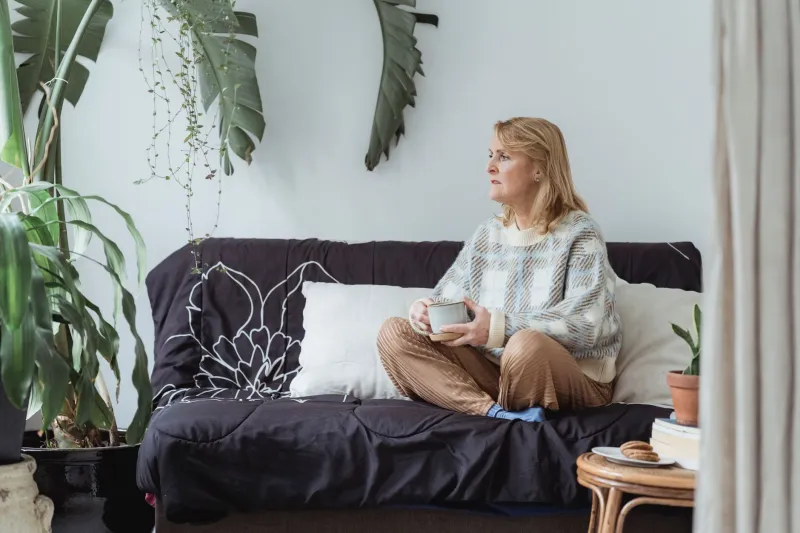
One of the more underappreciated drivers of comfort-seeking is loneliness — particularly in a post-pandemic American culture where social muscles have genuinely atrophied for a lot of people. Cozy, home-centered living can be a beautiful antidote to overstimulation, but it can also quietly reinforce isolation if it becomes a substitute for human connection rather than a complement to it.
If your coziest moments consistently involve being alone, and if the idea of changing that feels uncomfortable or even anxiety-inducing, it may be worth exploring that discomfort rather than decorating around it.
Therapists who specialize in social anxiety often note that the home can become what they call a "comfort fortress" — a space so thoroughly optimized for personal ease that the outside world begins to feel jarring by comparison. The contrast itself becomes a reason to stay in.
Reclaiming Comfort as Something That Serves You
None of this is meant to make you feel guilty about your sectional sofa or your extensive candle collection. Cozy living, at its best, is genuinely nourishing — it's about creating an environment and a pace of life that supports your wellbeing rather than depletes it. That's a worthy goal.
But wellbeing isn't the same as comfort. Sometimes they overlap beautifully. And sometimes they pull in opposite directions.
The healthiest version of a cozy life is one where comfort is a resource you draw on intentionally — a place you come back to after engaging with the harder, messier, more rewarding parts of being alive. Not a place you retreat to instead of engaging with them.
If you've been feeling stuck, disconnected, or like your home has somehow gotten smaller even as you've made it more inviting, it might be worth talking to a therapist. The Psychology Today therapist finder (psychologytoday.com/us/therapists) is a solid starting point if you're not sure where to begin.
Your cozy corner will still be there when you get back. That's the whole point of building one.