Hot Take: Small Apartments Can Be the Coziest Spaces of All — If You Stop Fighting the Square Footage
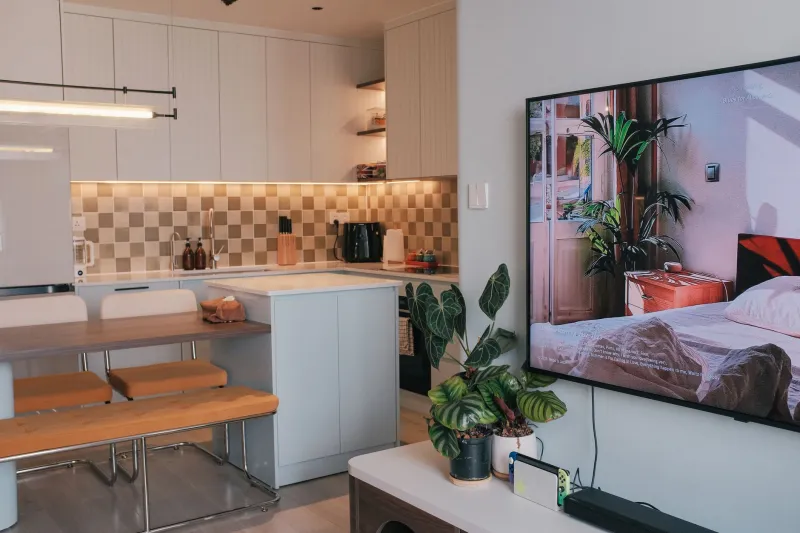
Let's get something out of the way: the idea that coziness requires a sprawling farmhouse, a reading nook the size of a small bedroom, or a living room big enough to get genuinely lost in is, frankly, a myth. It's a myth perpetuated by home renovation shows, real estate listings, and a cultural conflation of space with comfort that doesn't hold up when you actually look at the evidence.
Some of the warmest, most inviting homes I've ever walked into have been studio apartments in Brooklyn, 400-square-foot casitas in Austin, and one-bedroom rentals in Chicago where the kitchen and living room technically share the same twelve feet of floor space. The owners of those spaces had figured something out that eludes people in much larger homes: coziness isn't about square footage. It's about intention.
If your small apartment feels cold, echoing, or somehow impossible to make feel like home, here's my honest take on why — and what to actually do about it.
The Real Reason Small Spaces Feel Cold
Before we get to solutions, it's worth diagnosing the actual problem. Most small apartments feel cold or unwelcoming for a handful of predictable reasons, and almost none of them are about size.
Too much empty wall. Bare white walls in a small room don't make it feel bigger — they make it feel unfinished and institutional. The eye needs something to land on.
Hard surfaces with no softness. Many apartments, especially newer builds, feature tile or laminate floors, flat-painted walls, and minimal architectural detail. Without textiles and organic materials to absorb sound and add visual warmth, the space feels like a waiting room.
Overhead lighting only. This is the single most common design mistake in small apartments, and it's devastating to atmosphere. A single overhead fixture flattens a room and makes it feel utilitarian rather than welcoming.
Furniture that doesn't fit the scale. Either too big (one massive sofa that eats the entire room) or too small and sparse (a few pieces floating in open space with nothing anchoring them).
No defined zones. In an open-plan small space, everything bleeding into everything else creates visual and psychological chaos. Without distinct areas, the brain can't relax — there's no clear signal about what this space is for.
Fix the Lighting First, Always
I'll say it again because it bears repeating: overhead lighting is the enemy of coziness in any space, but it's especially brutal in a small apartment where there's often just one fixture per room and no architectural details to compensate.
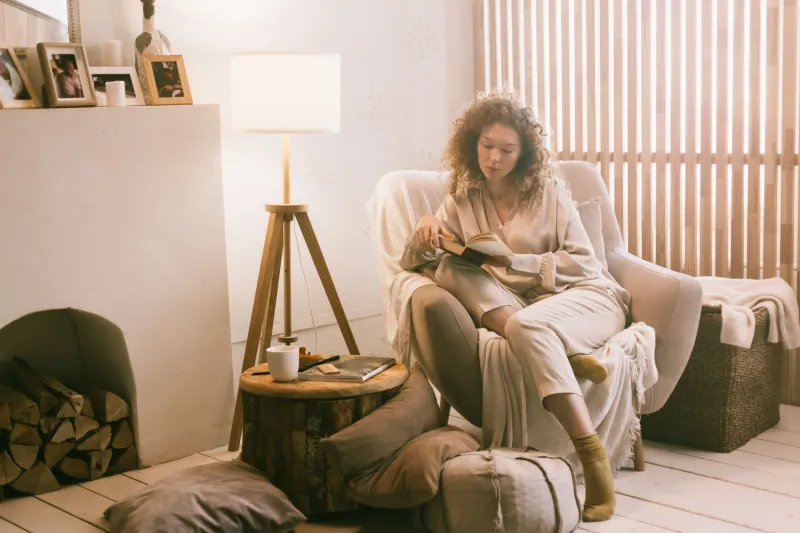
Add lamps. Plural. A floor lamp in the corner, a table lamp on a side table or nightstand, a small lamp on a bookshelf if you have one. The goal is to create multiple light sources at different heights, all with warm-white bulbs (2700K — look for it on the box). This creates depth, dimension, and a sense of warmth that no overhead light can replicate.
Candles are also genuinely transformative and cost almost nothing. Even a few tea lights on a coffee table change the entire mood of an evening in a small space. Battery-operated versions work great if your lease has restrictions.
Zone Your Space Visually
One of the most effective things you can do in a small open-plan apartment is create psychological zones — areas that feel distinct from one another even without walls to separate them. This isn't just aesthetically pleasing; it's neurologically important. When your brain can identify a space as a living area versus a sleeping area versus a working area, it can shift modes appropriately. Without those cues, everything blurs together and the space feels restless.
The easiest way to zone a small space? Rugs. A rug under your sofa and coffee table defines the living area. A smaller rug beside your bed anchors the sleeping zone. A rug under your desk separates the work area. This works even in studios where those zones are just feet apart.
Bookcases, curtains hung from ceiling to floor, and even the strategic placement of a sofa facing away from the sleeping area all create visual separation without taking up extra square footage.
Go Vertical and Layer Texture
Small spaces have one underutilized dimension: height. Tall bookshelves, curtains hung close to the ceiling (even if the window is smaller), floating shelves stacked upward — all of these draw the eye up and make a room feel larger and more considered. A wall of books is also one of the most effective cozy-making design elements there is, full stop.
Meanwhile, layering texture is your best tool for making a small space feel rich rather than sparse. A jute rug topped with a smaller wool rug. Linen curtains next to a velvet throw pillow. A wooden side table beside an upholstered chair. The contrast of materials creates visual and tactile interest that makes a room feel full without adding clutter.
Rental-Friendly Moves That Actually Work
If you're renting — and a lot of us are — the standard advice about painting walls and knocking down partitions is useless. Here's what you can actually do without losing your security deposit.
Removable wallpaper has gotten genuinely good in recent years. Brands like Chasing Paper and Tempaper offer peel-and-stick options that add color and pattern to a single accent wall without any permanent commitment. One warm, textured wall transforms a room.
Command strips and hooks can handle more than you'd think — artwork, floating shelves (check the weight limits carefully), mirrors, and curtain rods. Mirrors, by the way, are one of the oldest tricks in the small-space playbook for a reason: they bounce light and create the visual impression of depth.
Furniture with legs rather than pieces that sit directly on the floor create a sense of visual breathing room. A sofa or bed frame with visible legs makes a small room feel less heavy and more open.
Plants, every time. Even one medium-sized plant — a pothos, a snake plant, a monstera if you have decent light — adds life, color, and organic warmth to a small space in a way that no decor item can quite replicate.
Stop Waiting for a Bigger Place
Here's the honest opinion part of this piece: a lot of people treat their small apartment as temporary — a placeholder until they can afford something more "real." And while I understand that impulse completely, it's one of the most effective ways to guarantee that your current home never feels good to be in.
Coziness isn't waiting for you at 1,500 square feet. It's available right now, in the space you actually have, with a lamp and a throw blanket and a rug that fits your actual floor. The apartment that feels like a sanctuary isn't the one with the most room — it's the one where someone decided to pay attention.
Start there.