Why the Best Cozy Spaces Aren't Actually Easy to Be In
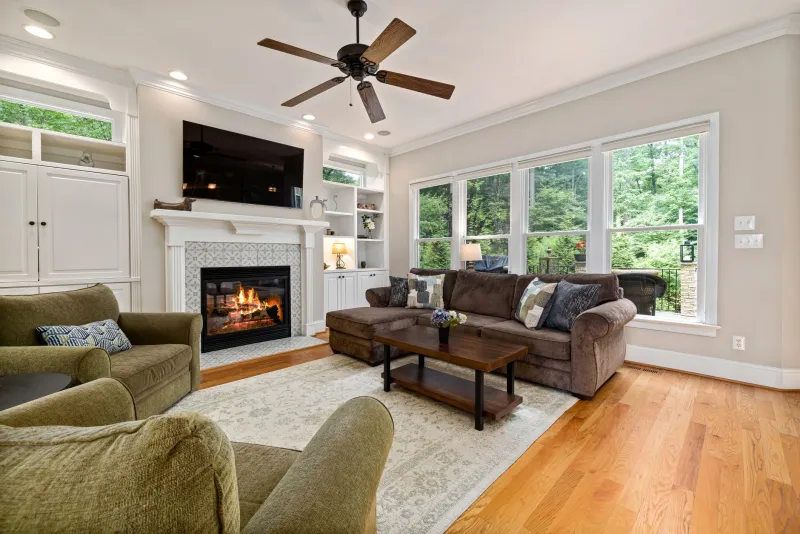
There's a version of the ideal cozy room that most of us have pinned somewhere in our brains. Soft lighting, a plush sofa, maybe a throw blanket that costs more than it should. Nothing out of place. Nothing demanding your attention. Just pure, uninterrupted ease.
And yet — have you ever actually sat in a room like that and felt... kind of nothing?
You're not broken. That hollow feeling is real, and it has a name. Researchers who study wellbeing call it the difference between passive and active comfort. One just happens to you. The other pulls you in. And the surprising truth is, your most satisfying spaces probably need a little more of the latter than you've been giving them.
The Problem With Perfectly Frictionless Rooms
We live in an era that has optimized hard for convenience. One-click everything. Streaming libraries so vast you can spend 45 minutes picking something and never actually watch it. Smart home devices that remove every possible micro-task from your evening routine. It sounds like progress, and in a lot of ways it is — but when we apply that same logic to the spaces we're supposed to rest in, something goes sideways.
A room with nothing to engage with is, paradoxically, a room that offers you very little. Your brain doesn't actually want to be completely idle. It wants to be gently occupied. There's a meaningful difference between the mental quiet that comes from focused, absorbing activity — a jigsaw puzzle, a sketch, a slow and demanding novel — and the restless blankness of lying on a couch with your phone open to nothing in particular.
The first feels restorative. The second tends to feel like wasted time, even when you desperately needed a break.
What "Good Friction" Actually Looks Like
Friction, in this context, doesn't mean stress. It doesn't mean turning your living room into a productivity zone or guilting yourself into hobbies you don't actually enjoy. Think of it more like texture — the way a well-worn hardcover has more personality than a smooth screen, or the way hand-grinding coffee beans makes the first sip taste better somehow.
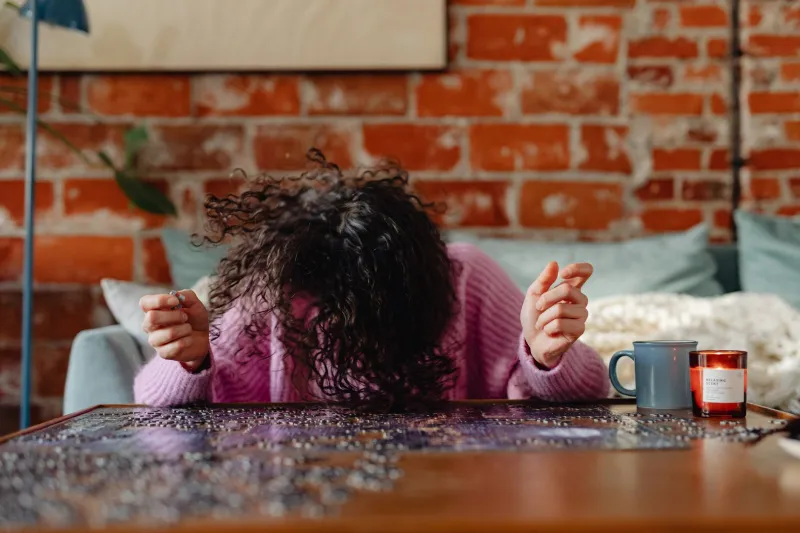
Good friction is low-stakes engagement. It's a half-finished puzzle left on the coffee table that beckons you back every time you walk past. It's a basket of yarn near the reading chair that makes the chair feel purposeful, not just decorative. It's a small chalkboard in the kitchen where you're slowly working through a list of recipes you actually want to cook.
These tiny points of resistance give your space a kind of aliveness that pure aesthetic comfort can't manufacture. They tell you — and anyone who visits — that real life happens here. That you happen here.
The Psychology Behind Why This Works
Psychologists who study flow states — those absorbed, time-disappearing moments of deep engagement — have found that they require a sweet spot between challenge and skill. Too easy, and you're bored. Too hard, and you're anxious. But right in the middle? That's where contentment lives.
The same principle scales down beautifully to your living room. A puzzle that's just tricky enough. A book that rewards your attention without punishing your distraction. A watercolor set that you're genuinely still learning to use. These aren't chores. They're invitations into a kind of gentle absorption that passive comfort — scrolling, background TV, staring at the ceiling — simply can't replicate.
There's also something to be said for the sense of belonging that comes from a space that holds your ongoing projects. When your home reflects your interests and your in-progress things, it stops feeling like a hotel room you happen to sleep in and starts feeling like an extension of who you actually are.
How to Add Meaningful Friction Without Cluttering Your Space
Here's where a lot of people get tripped up: they hear "add things to your space" and immediately imagine chaos. But thoughtful friction isn't clutter. It's intention.
Keep one active project visible at a time. A puzzle on a tray. A knitting project in a pretty basket. A single book on the side table (not a towering stack of guilt). The goal is one clear invitation, not a to-do list disguised as décor.
Create a dedicated hobby corner. Even in a small apartment, a chair angled toward a little table with your supplies — watercolors, a journal, a set of cards you're learning to play — creates a zone that says this is where I make things happen. That corner will pull you toward it in a way that a bare, beautiful room simply won't.
Let some things be analog. In a world of apps and digital everything, there's something quietly radical about a physical crossword puzzle book, a paper journal, or a set of recipe cards you're slowly filling in by hand. The slight inconvenience of analog engagement is actually the point. It slows you down in the best possible way.
Choose hobbies that live in the room. The key is accessibility. A guitar you have to dig out of a closet will collect dust. A guitar on a simple wall mount in the living room will get played. Make the friction of starting as low as possible, while keeping the engagement of doing pleasantly real.
Rethinking What "Relaxing" Actually Means
We tend to conflate relaxation with passivity — with doing as little as possible. But ask anyone who's spent a Sunday afternoon deep in a jigsaw puzzle, or finally finished the quilt they'd been working on for three months, and they'll tell you: that kind of tired feels good. It feels earned. It feels like you were actually present for your own afternoon.
Your coziest spaces don't have to be empty of demands. They just have to be full of the right ones — gentle, chosen, and genuinely yours.
So maybe the next time you're redesigning a corner of your home, resist the urge to clear everything away in pursuit of that serene, magazine-perfect blankness. Leave a little something to do. Leave a little something to come back to.
That's not clutter. That's a life being lived — and there's nothing cozier than that.